

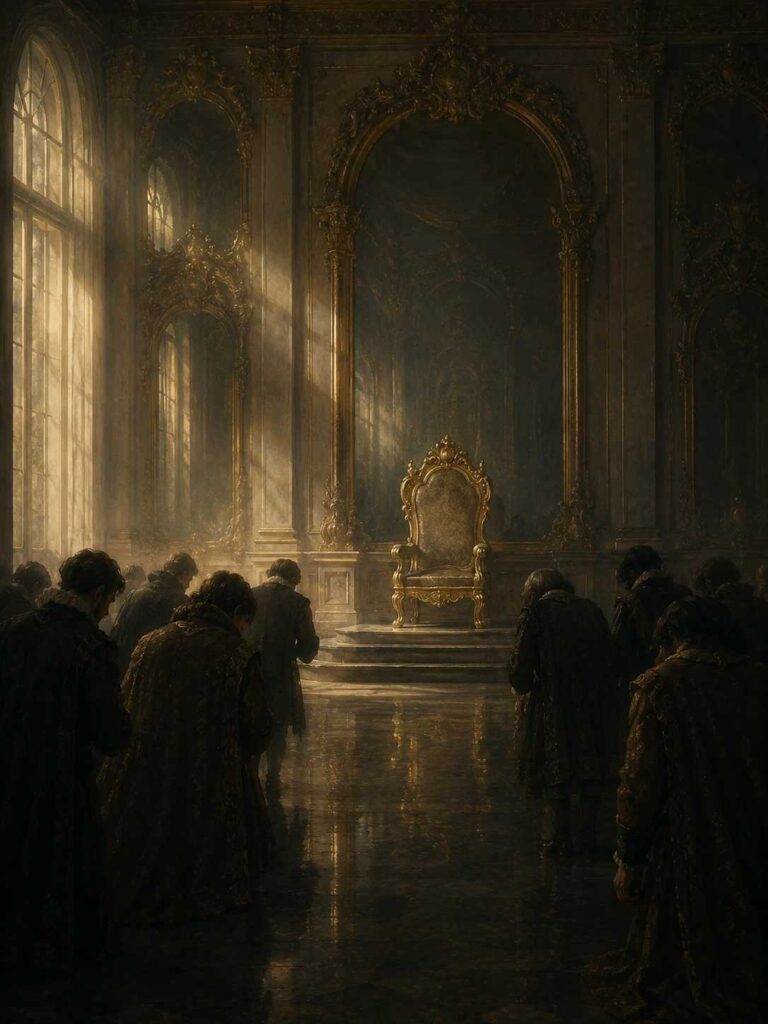
Many years ago,
there lived an emperor who cared for nothing so much as his clothes.
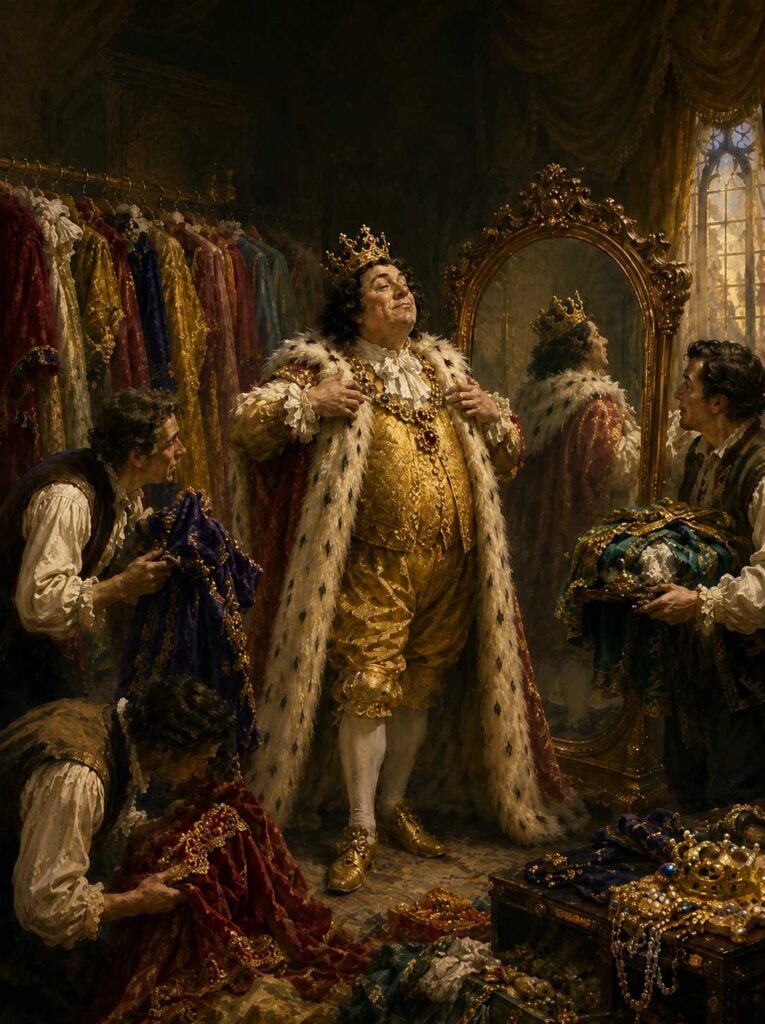
He spent all his money on dressing himself finely, cared nothing for his soldiers, and never went out unless it was to show off his new clothes. He had a coat for every hour of the day, and just as people say of a king, “He is in council,” so it was always said of him, “The emperor is in the dressing-room.”
In the great city where he lived, life was cheerful. Strangers came every day. One day two swindlers arrived, saying they were weavers and that they could weave the most beautiful cloth imaginable. Not only were the colours and patterns uncommonly fine, but clothes made from this cloth had a wonderful quality: they were invisible to anyone who was unfit for his post, or hopelessly stupid.
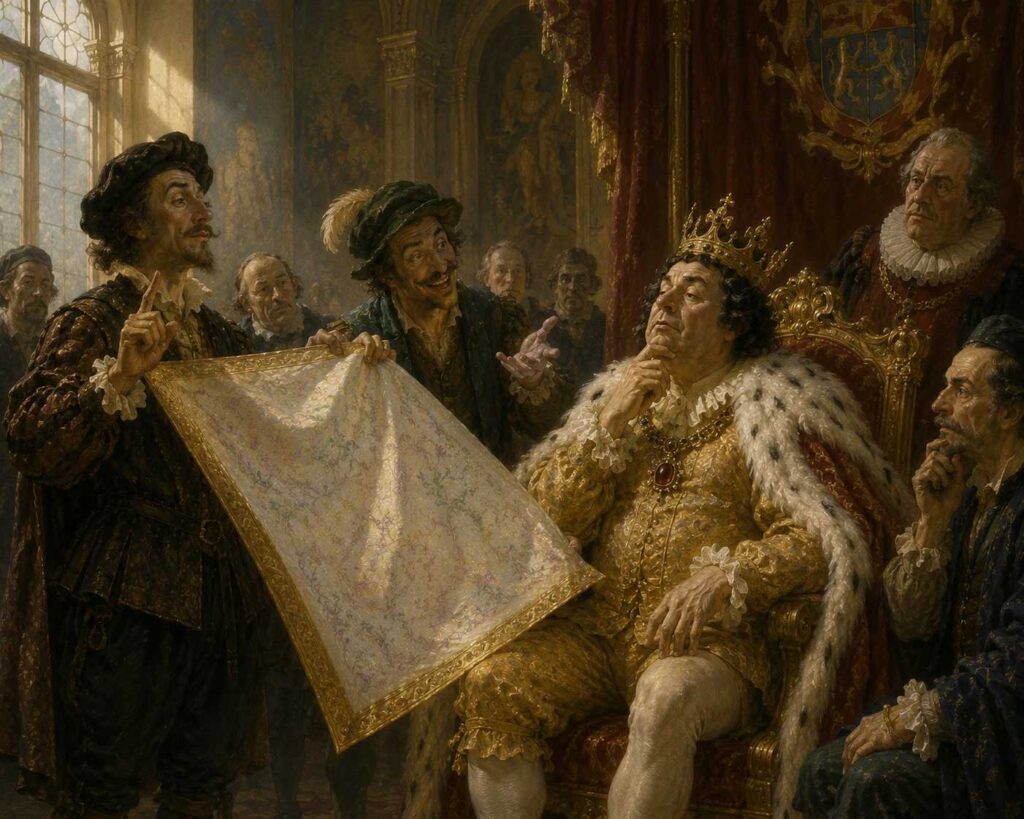
“Those would be just the clothes for me,” thought the emperor. “If I wore such a suit I could tell at once which men in my empire were not fit for their posts. Yes, I must have this cloth woven for me at once.” He paid the two swindlers a large sum in advance, and they set up their looms.
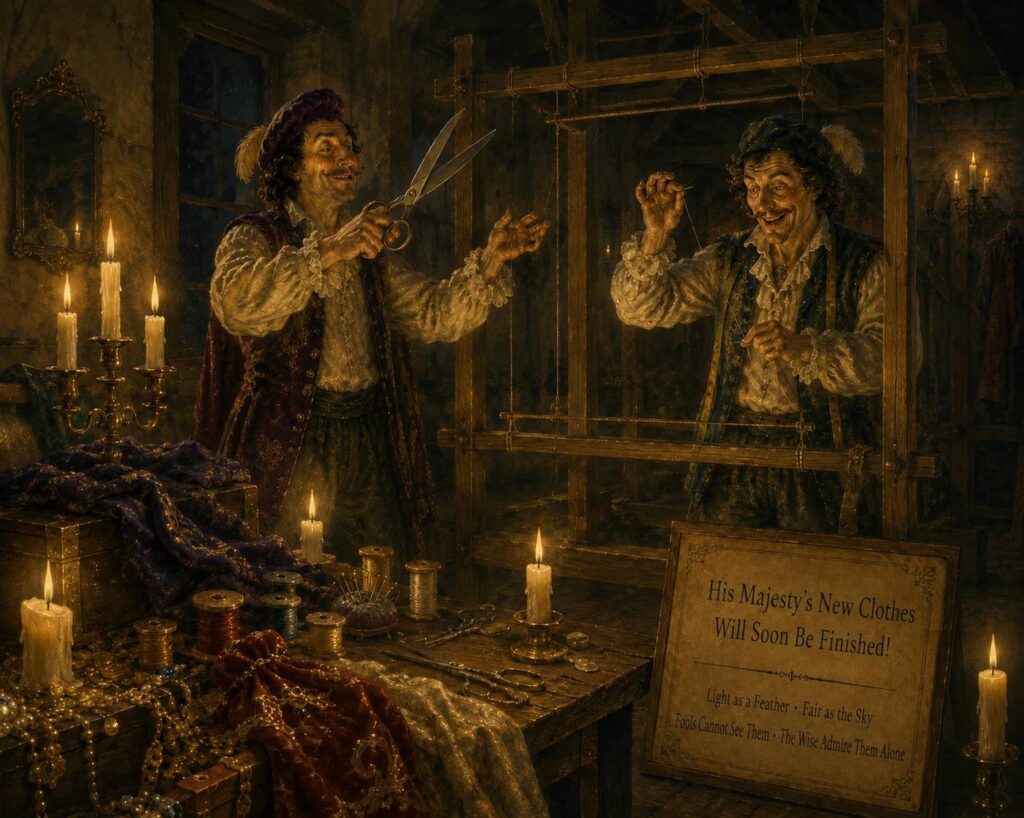
They set up two looms and pretended to work, but there was nothing whatever on the frames. They called boldly for the finest silk and the best gold thread, put both into their own bags, and sat at the empty looms from morning until late into the night.
“I should like to know how the weavers are getting on,” thought the emperor. But he recalled that anyone stupid or unfit would not be able to see the cloth. He believed he had nothing to fear for himself, yet thought it wiser to send someone else first. All the people in the city had heard of the cloth’s wonderful quality, and everyone was eager to find out how foolish his neighbour might be.
“I will send my faithful old minister to the weavers,” thought the emperor. “He can judge the cloth better than anyone, for he has sense, and no one is more fit for his post.”
So the good old minister went to the room where the two swindlers sat at their empty looms.
They were busy as ever, working away at nothing at all.
“Heaven preserve us,” thought the old minister, opening his eyes very wide.
“I cannot see anything at all.”But he did not say so.
The two swindlers begged him to come closer, and asked whether the colours were not beautiful and the pattern exquisite. They pointed to the empty frames. The poor old minister looked and looked, but he could see nothing, for there was nothing to see.
“Good heavens,” he thought, “am I really so foolish? I have never suspected it, and no one must know. Am I unfit for my post? No, I must never tell anyone that I could not see the cloth.”
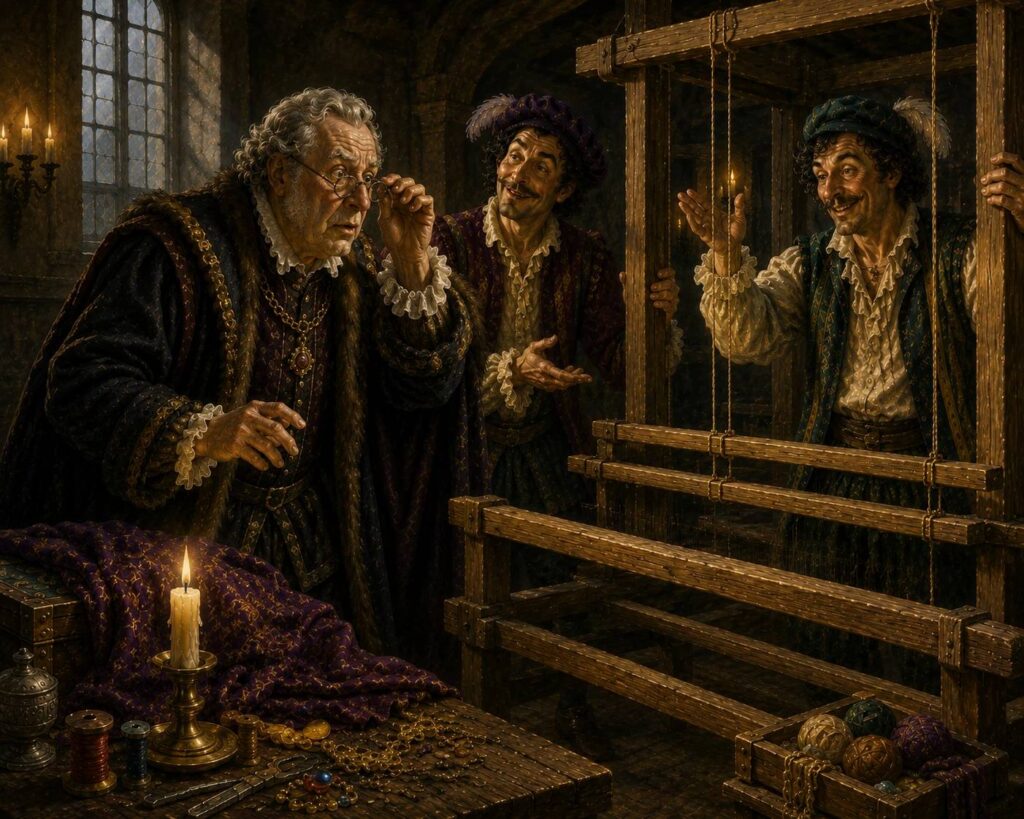
“Well, have you nothing to say about it?” asked one of the weavers.
“Oh, it is beautiful, quite beautiful,” said the old minister, peering through his spectacles. “What a pattern, and what colours. Yes, I shall tell the emperor that I am very pleased with it.”
“We are delighted to hear it,” said both the weavers, and they named all the colours and described the pattern. The old minister listened carefully so that he could repeat their words to the emperor, and so he did.
The swindlers now demanded more money, more silk, and more gold thread. They put it all into their own pockets, and not a thread went on to the looms, though they continued to sit at them as before.
The emperor soon sent another honest official to see how the weaving was progressing. He fared no better: he looked and looked, but as there was nothing on the empty looms, he could see nothing.
“Is not the cloth beautiful?” asked the two swindlers, pointing to the empty frames. There was no pattern at all.
“I am not stupid,” thought the official. “I suppose I am not fit for my good post. That would be strange, but I must not let it show.” So he praised the cloth he could not see and assured them of his delight. “Yes, it is truly lovely,” he told the emperor.
All the people in the city were talking about the splendid cloth.
While the cloth was still on the loom, the emperor wished to see it himself. With a number of courtiers — including the two honest officials who had already visited — he went to the clever swindlers. They were working away as hard as ever, weaving with no thread at all.
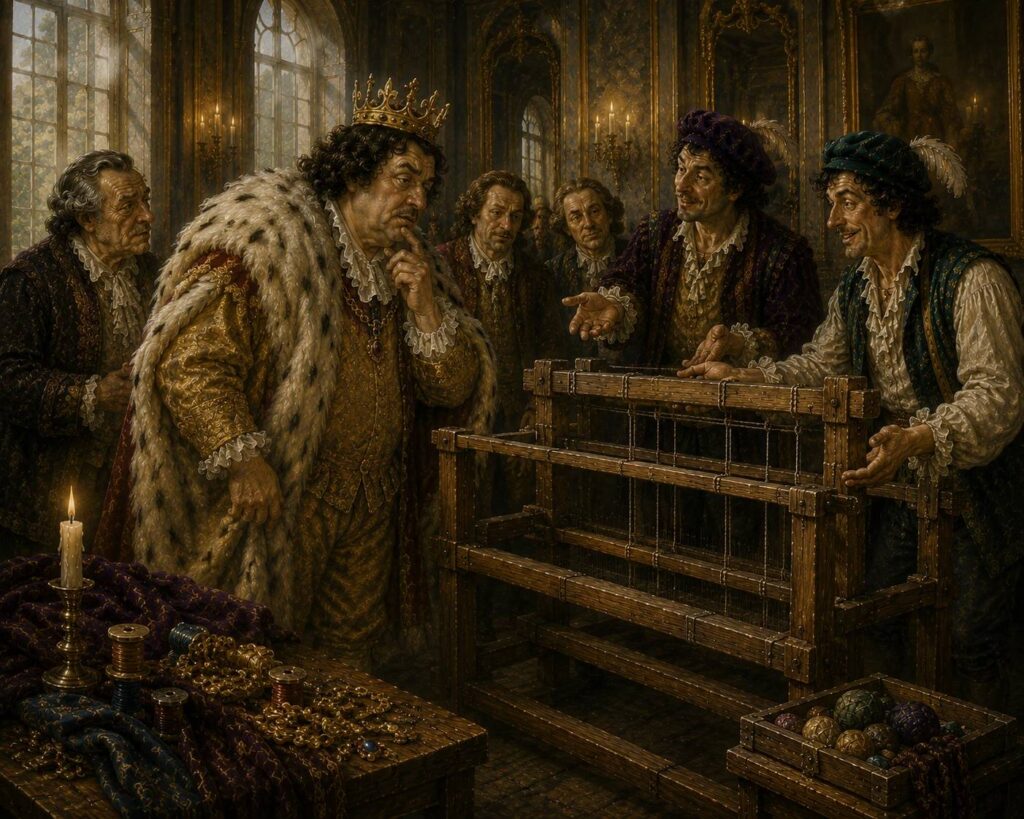
“Is it not beautiful?” said both the honest officials. “Will your Majesty look at the pattern and the colours?” They pointed to the empty loom, for they imagined that the others could see the cloth.
“What is this?” thought the emperor. “I can see nothing. This is terrible. Am I foolish? Am I not fit to be emperor? That would be the worst thing that could happen to me.”
“Oh, it is beautiful, it is enchanting,” said the emperor, nodding his head with a satisfied air.
He gazed at the empty loom and would not say that he saw nothing. All the courtiers with him looked and looked, and though none of them could see anything, they all said, like the emperor, “Oh, it is truly beautiful.” They advised him to wear the new clothes at the great procession which was soon to take place.
“Superb! Exquisite! Perfect!” went from mouth to mouth, and everyone was delighted. The emperor gave the two swindlers the title of Court Weavers, with an order to wear in their buttonholes.
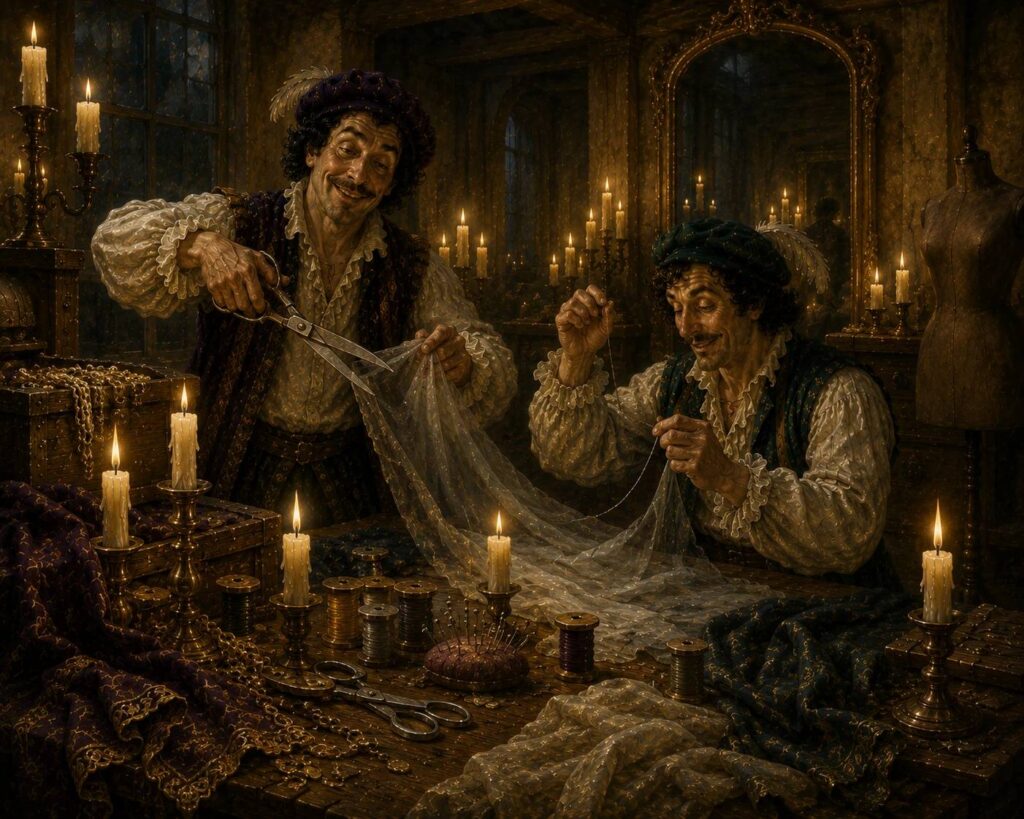
The night before the procession the swindlers sat up with sixteen candles burning, working through the night. They pretended to take the cloth from the loom, cut the air with great scissors, sewed with needles that had no thread, and at last said, “Look — the emperor’s new clothes are ready.”
The emperor came with his most distinguished knights. Each swindler raised an arm as if holding something, saying: “Here are the trousers. Here is the coat. Here is the cloak.”
And so on. “The cloth is as light as a spider’s web. One would think one had nothing on, — and that is its great virtue.”
“Quite so,” said all the knights. But they could see nothing, for there was nothing to see.
“Will it please your Majesty to take off your clothes,” said the swindlers, “so that we may dress you before the great mirror?”
The emperor took off all his clothes. The swindlers pretended to hand him each garment in turn, fussing about his waist as if fastening something on. The emperor turned and twisted before the mirror.
“How well they fit, how beautifully they are cut,” said everyone. “What a pattern, what colours! A magnificent suit.”
“The canopy to be carried over your Majesty in the procession is waiting outside,” said the chief master of ceremonies.
“Yes, I am quite ready,” said the emperor. “Do my clothes fit well?” He turned again before the mirror, as if truly admiring his fine suit.
The chamberlains who were to carry the train stooped and groped along the floor as if lifting it. They walked holding their hands in the air, not daring to let anyone see that they could see nothing at all.
And so the emperor walked in the procession under the magnificent canopy. All the people in the streets and at the windows said: “How beautiful the emperor’s new clothes are! What a splendid train, how well they fit! ” Nobody would admit that he saw nothing, for that would have shown he was unfit, or very stupid. None of the emperor’s garments had ever been so much admired.
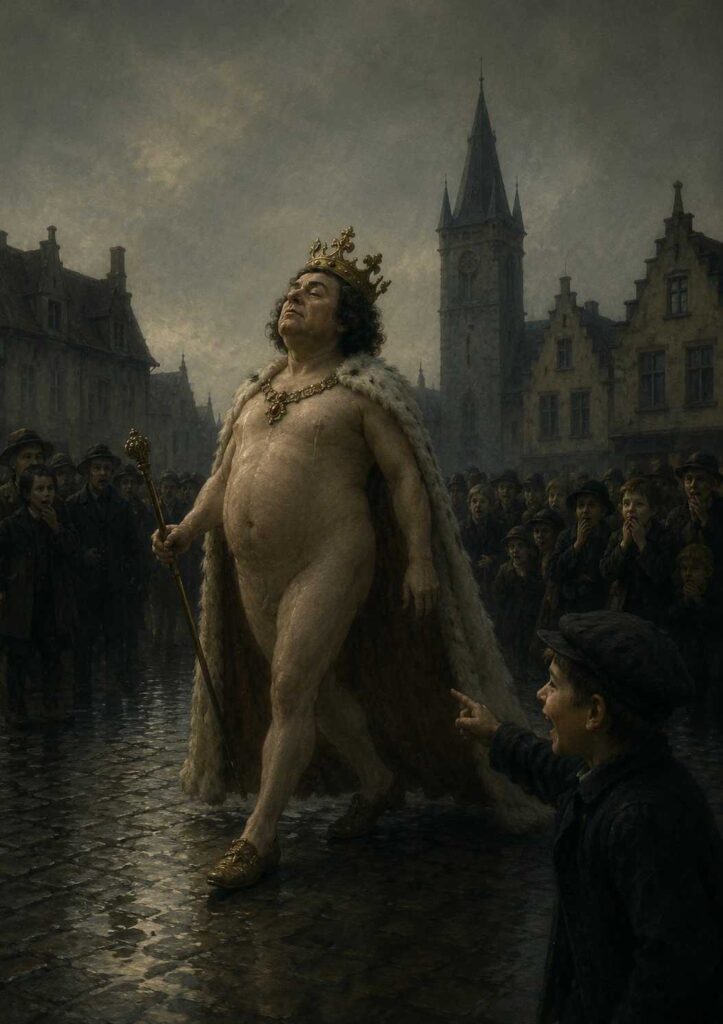
“But he has nothing on,” a little child called out at last.
“Good heavens, listen to the innocent child,” said the father, and whispered to another what the child had said.
“He has nothing on! A little child says he has nothing on.”
“But he has nothing on,” the whole people cried at last. The emperor shivered, for it seemed they were right. But he thought, “I must go through with the procession now.”
And he carried himself more proudly than ever, while the chamberlains walked behind him holding the train that was not there.
Before You Leave
Reflection
Sometimes,
people are afraid to speak the truth,
not because they do not know it.
But because they are afraid to stand alone.
Written more than a hundred and eighty years ago,
this story still reflects the world we live in.
When more and more people repeat the same words,
do we still have the courage to keep our own judgment?
When everyone chooses silence,
who is the one who finally speaks the obvious truth?
This is not only a story about an emperor.
It is a fable about human nature, courage, and honesty.
Some stories
are meant to be read
And some stories
are meant to be treasured for a lifetime
If this story
stays with you
If a single line
that stays with you
If you wish
walk with it
a little further